Chronic Muscle Pain & Trigger Point Treatment in Eatontown, NJ
Tight, painful knots in your neck, back, or jaw that keep coming back? Shockwave therapy, with optional Class IV laser, is a non-invasive option for chronic muscle pain that massage and stretching haven’t fixed.
Or call 732-389-2800

- Non-surgical
- No injections
- Individual clinical evaluation
- Eatontown, NJ
Does This Sound Like Your Muscle Pain?
Chronic muscle pain has a pattern that many people recognize, whether it’s in the neck, back, shoulders, or jaw:
- A deep, persistent ache in the same spot that never fully goes away
- Tight, tender knots you can feel when you press on the muscle
- Pain that spreads to another area, like from the shoulder into the head, or from the low back into the buttock
- Stiffness that’s worse after sitting, driving, sleeping, or stress
- Relief from massage or stretching that only lasts a day or two
If the same knots keep coming back no matter what you try, shockwave therapy may be worth considering.
What Are Trigger Points?
Trigger points are small, tight, irritable spots within a muscle, often felt as a knot or a taut band. Pressing on one is tender, and it can send pain to another area. A trigger point in the upper shoulder, for example, commonly causes headaches.
When muscle pain lasts for months, it’s often called myofascial pain. The muscle can get stuck in a cycle of tension, poor circulation, and sensitivity that stretching and massage alone don’t break.
Who Tends to Develop It
- People who sit at a desk or computer for hours a day
- Drivers and people who look down at phones or tablets for long periods
- Workers who lift, carry, or hold the same posture all day
- People under ongoing stress, which increases muscle tension
- People who clench or grind their teeth
How Shockwave Therapy Helps Chronic Muscle Pain
Radial shockwave therapy has been studied for myofascial pain and trigger points, and research suggests it can help reduce pain and muscle tenderness.
Shockwave therapy delivers acoustic pressure waves into the tight, tender area of the muscle. The goal is to release tension, improve local circulation, and calm the sensitized tissue so the muscle can move and recover normally.
Because it’s non-invasive and involves no needles or injections, it gives people another option alongside or instead of trigger point injections and dry needling.
Adding Class IV Laser
Class IV laser therapy can be added to your shockwave sessions. Instead of mechanical energy, it uses therapeutic light to support cellular activity and tissue recovery in the treated area. Dr. Kovacs will tell you whether adding laser makes sense for your case.
Not sure what’s causing your pain?
A short evaluation will tell you whether shockwave therapy is a good fit.
Chronic Neck & Upper Back Pain
Much of the chronic pain people feel in the neck, upper back, and between the shoulder blades comes from overworked muscles, especially in people who sit, drive, or work at a screen all day.
- Tight, aching muscles along the top of the shoulders and base of the skull
- Knots between the shoulder blades
- Tension headaches that start in the neck
- Stiffness turning your head, especially after sleeping or driving
When neck pain comes with arm numbness, tingling, or weakness, it may be coming from a disc or nerve instead of the muscle. That calls for a different approach, which is covered during your evaluation.
Chronic Low Back Pain
Muscles of the low back and buttock can develop trigger points that cause lasting pain, often spreading into the hip or the back of the thigh.
- A deep ache across the low back or on one side
- Pain and tenderness in the buttock muscles
- Stiffness getting out of bed or standing up after sitting
- Pain that builds over a long day of standing, lifting, or sitting
Back pain with leg numbness, weakness, or changes in bladder or bowel control is not muscle pain and needs prompt medical evaluation.
If your neck or back pain turns out to come from a joint, disc, or nerve, you may be better served by chiropractic care at our main practice, Eatontown Elite Care Center.
Jaw Pain & TMJ Disorder
Temporomandibular disorder, commonly called TMJ, causes pain in and around the jaw. In many people, the main source is the chewing muscles on the side of the face and temples rather than the jaw joint itself.
- Aching in the jaw, cheeks, or temples, often worse in the morning
- Pain or fatigue when chewing
- Clenching or grinding, especially during sleep or stress
- Headaches at the temples or around the ear
When jaw pain is muscular, those muscles can be treated like other trigger points, with intensity adjusted for the face. If you wear a night guard or see a dentist for TMJ, we’re glad to work alongside them.
Your First Visit: Evaluation Comes First
Muscle pain can mimic, or accompany, other problems. Before recommending treatment, Dr. Kovacs will:
- Review your work, posture, sleep, stress, and what you’ve already tried
- Examine the muscles and locate the trigger points involved
- Test joint motion, reflexes, strength, and sensation to check for disc, joint, or nerve involvement
- Look for warning signs that call for imaging or a referral before any treatment
If shockwave therapy isn’t the right choice for you, you’ll hear that directly, along with what we’d recommend instead. We see patients from Eatontown and across Monmouth County, including Long Branch, Red Bank, Tinton Falls, and Oceanport.
What Treatment Looks Like
- Short sessionsThe shockwave portion takes only a few minutes per area, with a few more added when laser is included.
- A series, not a single visitMost patients are treated over several sessions, commonly spaced about a week apart. Your plan depends on how many areas are involved and how you respond.
- Relief often comes soonerMany people notice the muscle feels looser within the first few sessions, with improvement building over the following weeks.
- Little to no downtimeMost people return to work and normal activities the same day. Some feel temporary soreness in the treated muscle afterward.
- Keeping it from coming backPosture, workstation, and simple exercise changes help keep trigger points from returning, and we’ll show you which ones matter most.
When Shockwave Isn’t the Right Fit
Shockwave therapy may not be appropriate if you:
- Are pregnant
- Have a bleeding disorder or take blood-thinning medication
- Have an infection, open wound, or tumor in the treatment area
- Have a pacemaker or other implanted device near the treatment area
- Have pain caused by a disc, nerve, fracture, or other problem rather than the muscle
Treatment is never applied over the front of the throat, directly over the spine, or near the eyes. These are all reviewed during your evaluation.
Muscle Pain & Trigger Point Treatment FAQs
Trigger points are tender by nature, so most people feel pressure and some discomfort, often a familiar “that’s the spot” feeling. Intensity is adjusted to your tolerance, and the discomfort stops when the session ends.
It depends on how long you’ve had symptoms, how many areas are involved, and how you respond. Most treatment plans involve a series of several sessions, and you’ll get a specific recommendation after your evaluation.
Massage works on the muscle from the surface, and dry needling uses thin needles inserted into the trigger point. Shockwave therapy reaches the tight tissue with acoustic pressure waves, with no needles. Some people use it after other approaches have only given short-term relief.
No. Shockwave therapy treats muscle and soft tissue pain, not disc or nerve problems. If your evaluation points to a disc or nerve, we’ll explain your options, including chiropractic care at our main practice.
Yes. Treatment focuses on the jaw and temple muscles and can work alongside a night guard or other dental care. Let us know who’s treating your TMJ so care can be coordinated.
Yes. Many people have trigger points in several connected areas, such as the neck, shoulders, and upper back. Your plan will cover every area that needs attention.
Coverage varies, and many health plans don’t cover shockwave therapy for muscle pain. We’ll go over costs and your options before you start treatment.
Related Conditions
What Our Patients Say
Verified Google reviews. Individual results vary, and treatment recommendations are based on an individual clinical evaluation.
★★★★★
In 1995 I injured my shoulder skiing. The next 30 years has been on and off pain of varying degrees, with no solid solution. I’ve done lots of conservative care, including PT, Acupuncture etc. I wanted to avoid surgery if possible. I saw Dr. Kovacs who started me on a regimen of shockwave therapy. I can happily say that since starting, this is the longest I’ve been pain free. My motion is better, and I don’t wake up after rolling on that shoulder. Highly recommend.
Dr. Mike F. · Google review
★★★★★
Dr. Kovacs and his staff are great! They are always so friendly and accommodating. Dr. Kovacs is incredibly knowledgeable and implements the most current treatment methods. He was able to treat my pain and keep me in the gym and on the golf course.
Matthew F. · Google review
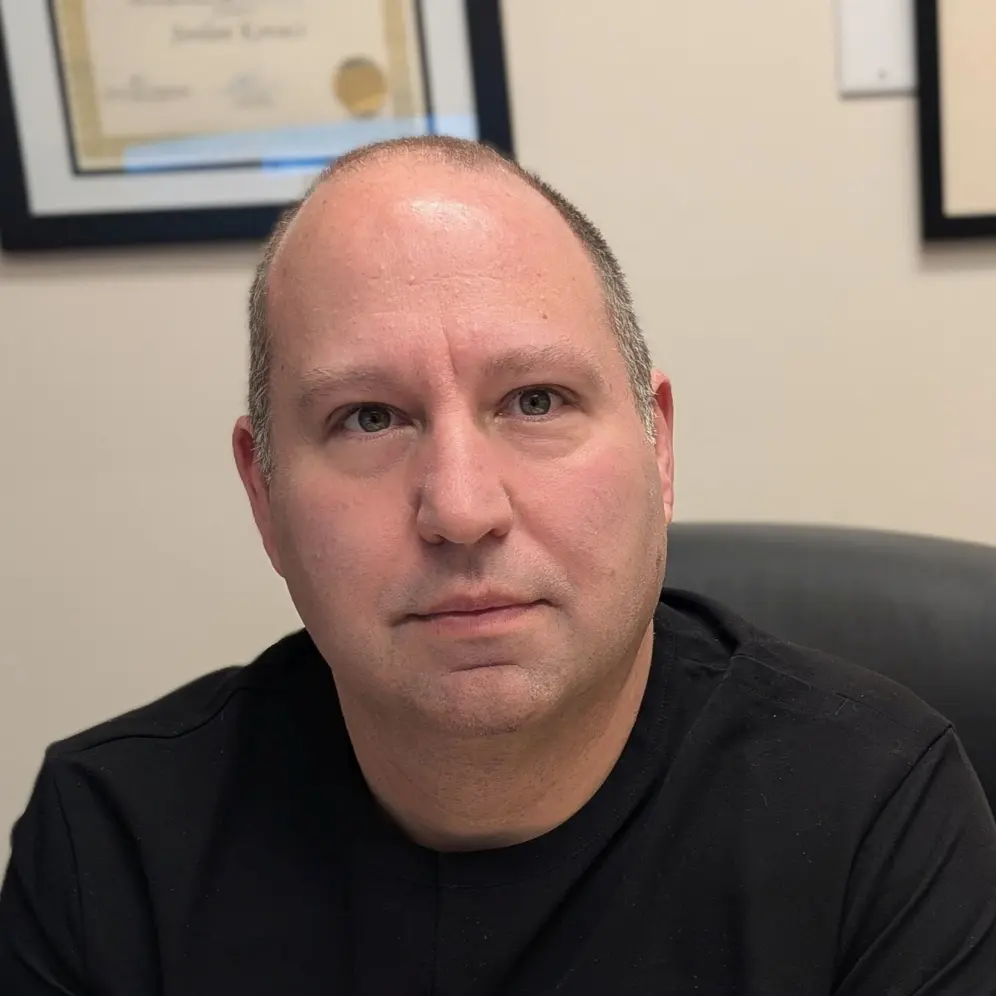
Evaluated & Treated by Dr. Jordan Kovacs
Dr. Jordan L. Kovacs, DC, FPSC, is the treating chiropractic physician at Eatontown Shockwave Therapy. His postgraduate training in spine and musculoskeletal care, diagnostic imaging, and injury evaluation shapes how every patient is assessed, starting with whether your condition is a good fit for shockwave therapy at all. If it isn’t, he’ll tell you and explain what is.
- Doctor of Chiropractic
- Fellowship in Primary Spine Care (FPSC)
- MRI interpretation training
- Published author, BMJ Case Reports
- National Chiropractor of the Year
Ready to finally get relief from those knots?
A short evaluation will tell you whether your condition is a good fit, and what we’d recommend if it isn’t.