Frozen Shoulder Treatment in Eatontown, NJ
Losing the ability to reach overhead or behind your back? Shockwave therapy, with optional Class IV laser, is a non-surgical option to help reduce pain and restore motion in a frozen shoulder.
Or call 732-389-2800

- Non-surgical
- No injections
- Individual clinical evaluation
- Eatontown, NJ
Does This Sound Like Your Shoulder?
Frozen shoulder has a pattern that sets it apart from other shoulder problems. Most people recognize several of these:
- Shoulder pain that started gradually, often without any clear injury
- Steadily losing motion: you can’t reach overhead, behind your back, or out to the side
- Trouble with everyday tasks like fastening a bra, reaching a back pocket, or putting on a jacket
- A deep ache that’s often worse at night
- Stiffness that doesn’t loosen up no matter how much you stretch
If your shoulder is both painful and stiff, and the stiffness keeps getting worse, frozen shoulder is a strong possibility.
What Is Frozen Shoulder?
Frozen shoulder, also called adhesive capsulitis, affects the capsule of connective tissue that surrounds the shoulder joint. The capsule becomes inflamed, then thickens and tightens, which limits how far the joint can move.
Unlike rotator cuff problems, where the shoulder usually still moves freely when someone else lifts your arm, frozen shoulder restricts motion in every direction, even when the arm is moved for you.
The Three Stages
- Freezing: pain builds and motion starts to disappear. This is usually the most painful stage.
- Frozen: pain may ease, but the shoulder stays very stiff.
- Thawing: motion slowly returns.
The whole process can take a year or longer, and some people never regain full motion. That’s why many people look for ways to manage pain and restore movement sooner rather than waiting it out.
Who Tends to Develop It
- Adults roughly 40 to 60 years old, and women more often than men
- People with diabetes, who are at significantly higher risk
- People with thyroid conditions
- People whose arm was immobilized after an injury or surgery
How Shockwave Therapy Helps Frozen Shoulder
Shockwave therapy has been studied as a non-surgical option for frozen shoulder, including in people with diabetes. Research suggests it can help reduce pain and improve shoulder motion.
Shockwave therapy delivers acoustic energy into the tissues around the shoulder joint. The goal is to reduce pain and stimulate local circulation and tissue remodeling, so the shoulder can tolerate the movement work that restores motion.
It works best as part of a plan that includes guided mobility exercises, not as a stand-alone treatment. Because it’s non-surgical and involves no injections, it gives people another option before turning to repeated injections, manipulation under anesthesia, or surgery.
Adding Class IV Laser
Class IV laser therapy can be added to your shockwave sessions. Instead of mechanical energy, it uses therapeutic light to support cellular activity and tissue recovery in the treated area. Dr. Kovacs will tell you whether adding laser makes sense for your case.
Not sure what’s causing your pain?
A short evaluation will tell you whether shockwave therapy is a good fit.
Why Pushing Through the Stiffness Can Backfire
When a shoulder gets stiff, the natural instinct is to stretch it hard. During the painful freezing stage, aggressive stretching can actually irritate the capsule and make pain worse.
The right amount of movement depends on which stage you’re in. Part of your evaluation is identifying that stage, so your exercises help the shoulder rather than inflame it.
Your First Visit: Evaluation Comes First
Several conditions can make a shoulder painful and stiff. Before recommending treatment, Dr. Kovacs will:
- Review when your symptoms started, any injury or surgery, and your health history
- Measure your shoulder motion in every direction, both on your own and with assistance
- Distinguish frozen shoulder from rotator cuff problems, calcium deposits, and joint arthritis
- Check your neck, since a pinched nerve in the neck can cause pain felt in the shoulder
- Decide whether an X-ray or other imaging is needed before treatment begins
If shockwave therapy isn’t the right choice for you, you’ll hear that directly, along with what we’d recommend instead. We see patients from Eatontown and across Monmouth County, including Long Branch, Red Bank, Tinton Falls, and Oceanport.
What Treatment Looks Like
- Short sessionsThe shockwave portion takes only a few minutes, with a few more added when laser is included.
- A series, not a single visitMost patients are treated over several sessions, commonly spaced about a week apart. Your plan depends on the stage of your frozen shoulder and how you respond.
- Pain first, then motionPain often eases before motion returns. Range of motion is measured at visits so you can see your progress.
- Little to no downtimeMost people return to work and normal activities the same day. Some feel temporary soreness in the shoulder afterward.
- Mobility work is essentialGentle, stage-appropriate exercises are what restore motion, and we’ll show you exactly which ones to do at home.
When Shockwave Isn’t the Right Fit
Shockwave therapy may not be appropriate if you:
- Are pregnant
- Have a bleeding disorder or take blood-thinning medication
- Have an infection, open wound, or tumor in the treatment area
- Recently had a cortisone injection in the shoulder
- Have a fracture, dislocation, or advanced shoulder arthritis
- Have shoulder pain coming from the neck rather than the shoulder itself
These are reviewed during your evaluation. Some are temporary, such as a recent injection, and simply mean waiting before treatment starts.
Frozen Shoulder Treatment FAQs
Most people feel pressure and some discomfort during treatment. Intensity is adjusted to your tolerance, especially during the painful freezing stage, and the discomfort stops when the session ends.
It depends on the stage of your frozen shoulder and how it responds. Most treatment plans involve a series of several sessions, and you’ll get a specific recommendation after your evaluation.
It often improves over time, but the process can take a year or longer, and some people are left with lasting stiffness. Treatment aims to reduce pain and help you regain motion rather than waiting it out.
Yes, in most cases. Frozen shoulder is more common and often more stubborn in people with diabetes, and shockwave therapy has been studied in this group. We’ll review your health history during your evaluation.
Many people regain most or all of their motion, but results vary with the stage and how long the shoulder has been stiff. We measure your motion throughout treatment so progress is tracked, not guessed.
Usually, yes, but you may need to wait several weeks after an injection before starting. Let us know the date of your last injection when you contact us.
Coverage varies, and many health plans don’t cover shockwave therapy for frozen shoulder. We’ll go over costs and your options before you start treatment.
Related Conditions
What Our Patients Say
Verified Google reviews. Individual results vary, and treatment recommendations are based on an individual clinical evaluation.
★★★★★
In 1995 I injured my shoulder skiing. The next 30 years has been on and off pain of varying degrees, with no solid solution. I’ve done lots of conservative care, including PT, Acupuncture etc. I wanted to avoid surgery if possible. I saw Dr. Kovacs who started me on a regimen of shockwave therapy. I can happily say that since starting, this is the longest I’ve been pain free. My motion is better, and I don’t wake up after rolling on that shoulder. Highly recommend.
Dr. Mike F. · Google review
★★★★★
Dr. Kovacs and his staff are great! They are always so friendly and accommodating. Dr. Kovacs is incredibly knowledgeable and implements the most current treatment methods. He was able to treat my pain and keep me in the gym and on the golf course.
Matthew F. · Google review
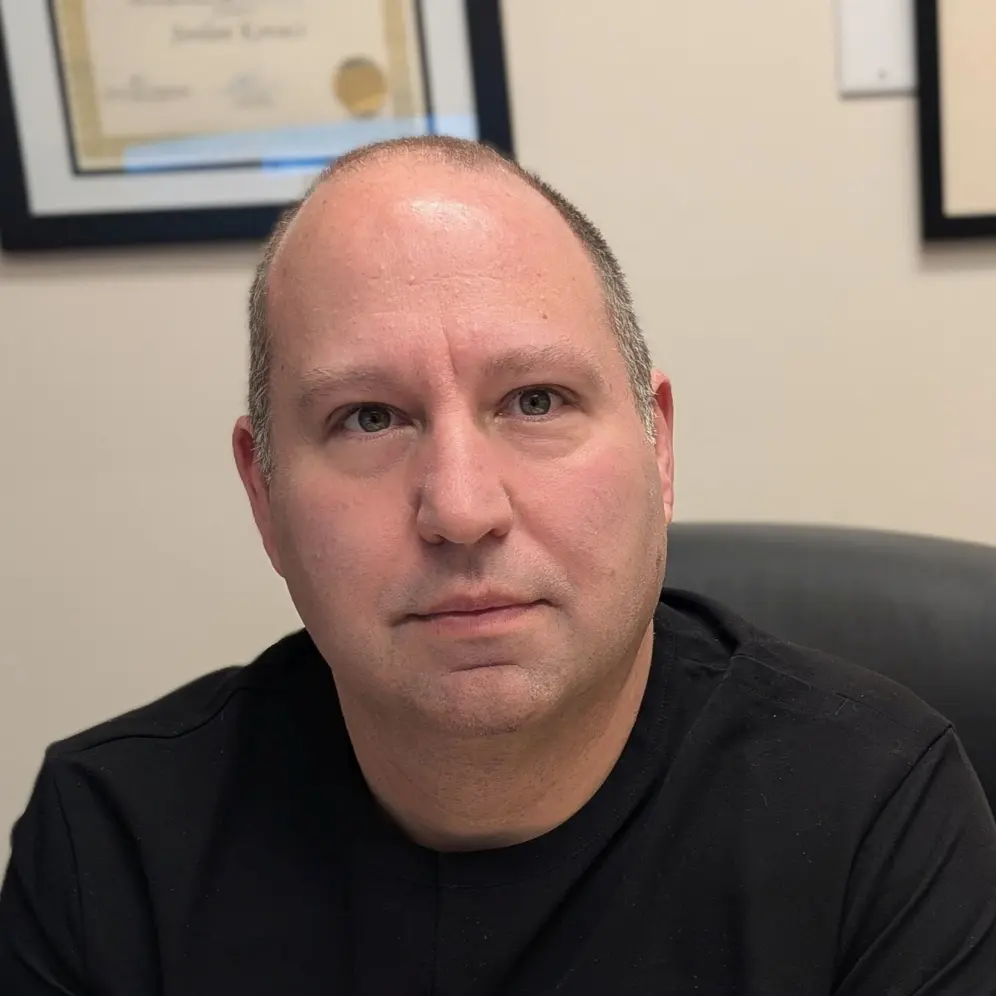
Evaluated & Treated by Dr. Jordan Kovacs
Dr. Jordan L. Kovacs, DC, FPSC, is the treating chiropractic physician at Eatontown Shockwave Therapy. His postgraduate training in spine and musculoskeletal care, diagnostic imaging, and injury evaluation shapes how every patient is assessed, starting with whether your condition is a good fit for shockwave therapy at all. If it isn’t, he’ll tell you and explain what is.
- Doctor of Chiropractic
- Fellowship in Primary Spine Care (FPSC)
- MRI interpretation training
- Published author, BMJ Case Reports
- National Chiropractor of the Year
Ready to get your shoulder moving again?
A short evaluation will tell you whether your condition is a good fit, and what we’d recommend if it isn’t.